Construction Waste Disposal On The Central Coast: What Builders Need To Document (And Which Bin To Use)
By Economy Waste Skip Bins • October 27, 2026
Construction waste disposal on the Central Coast requires more than ordering a skip bin. Builders need to classify waste correctly, separate materials where necessary and retain disposal records that demonstrate compliance with NSW requirements and project consent conditions. Choosing the right bin also helps control transport costs, avoid rejected loads and keep construction schedules on track.
For builders managing residential developments, commercial refurbishments or demolition projects, the process starts before the first load leaves the site.
At Economy Waste Group, we've supported Central Coast construction projects since 1990. Our mixed fleet and council-approved, EPA-licensed recycling facility in West Gosford allow us to manage different construction waste streams while helping builders meet their documentation and recovery requirements.
On this page:
- How Do You Dispose Of Construction Waste Legally In NSW? (Quick Answer)
- What Is A Construction Site Waste Disposal Plan?
- How Construction Waste Is Classified: VENM, ENM, General Solid And Restricted Solid Waste
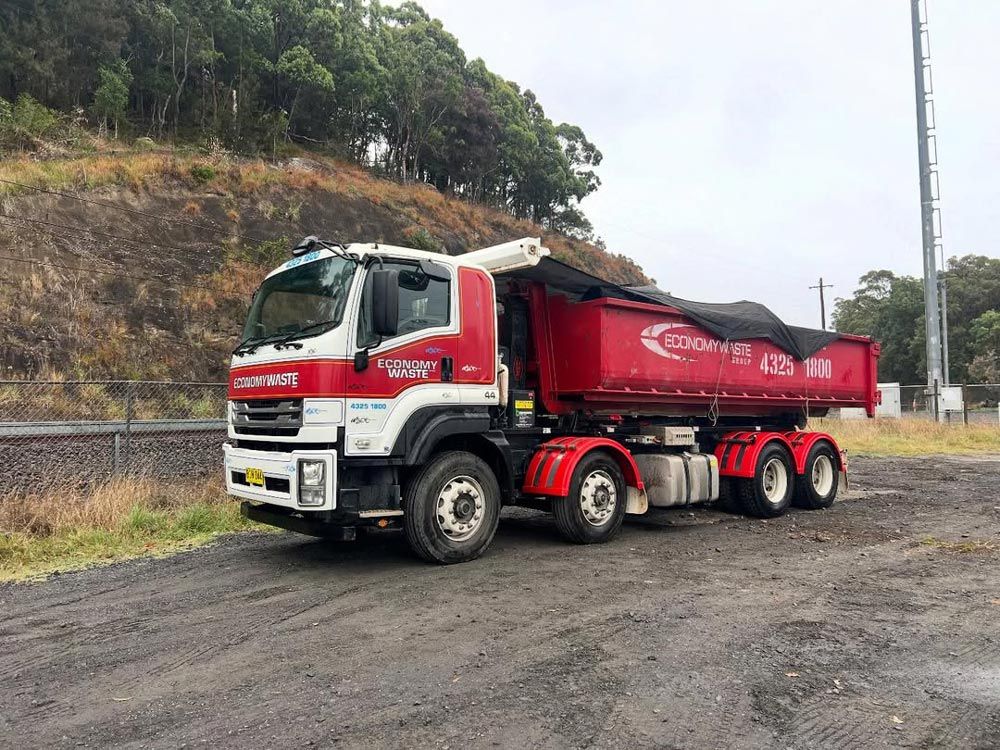
- Which Bin For Which Waste: Marrell Bins vs Hook Lift Bins
- When You Need A Craneable Or Tippler Bin Instead
- Why Clean Soil, Mixed Waste And Contaminated Spoil Can't Go To The Same Facility
- Proving Your Recovery Rate: What Builders Can Ask Their Waste Provider For
How Do You Dispose Of Construction Waste Legally In NSW? (Quick Answer)
To dispose of construction waste legally in NSW, builders must identify the waste type, determine its classification, select an authorised receiving facility and maintain appropriate disposal records.
A practical process involves five steps:
- Identify the materials: Determine whether the waste contains concrete, bricks, timber, plasterboard, soil or potentially contaminated material.
- Classify the waste: Apply the relevant NSW EPA waste classification requirements before arranging disposal.
- Separate incompatible materials: Keep clean excavation material, general building waste and potentially hazardous substances in appropriate waste streams.
- Choose suitable transport and disposal: Confirm that the bin and receiving facility can accept the classified material.
- Keep disposal evidence: Retain relevant waste receipts, weighbridge records, classification reports and any required tracking documentation.
Builders should also review their development consent conditions before work begins. Central Coast Council approvals may contain project-specific requirements for waste management, recycling and recordkeeping.
For local projects, our
skip bin hire Central Coast service provides access to a regional waste management operation, including our West Gosford recycling facility. This local processing option can reduce the time and transport costs associated with sending suitable construction waste to facilities further away, including Sydney.
What Is A Construction Site Waste Disposal Plan?
A construction site waste disposal plan explains how a building project will identify, separate, store, transport and dispose of waste throughout construction. Depending on the development approval, builders may need to prepare a waste management plan before commencing work and maintain records demonstrating how they followed it.
A useful construction site waste disposal plan should identify:
- Expected waste streams: Concrete, bricks, timber, plasterboard, metals, packaging, excavation spoil and other materials.
- Estimated quantities: Approximate volumes or weights generated during demolition, excavation and construction.
- Separation methods: Which materials require dedicated bins or separate collections.
- Collection arrangements: Bin types, collection frequency and the nominated waste contractor.
- Receiving facilities: Where each waste stream will go and whether the facility can legally accept it.
- Recovery objectives: How the project intends to reuse or recycle suitable materials.
- Documentation: What records the builder will retain to demonstrate compliance.
How Does A Waste Disposal Plan Work On A Real Building Site?
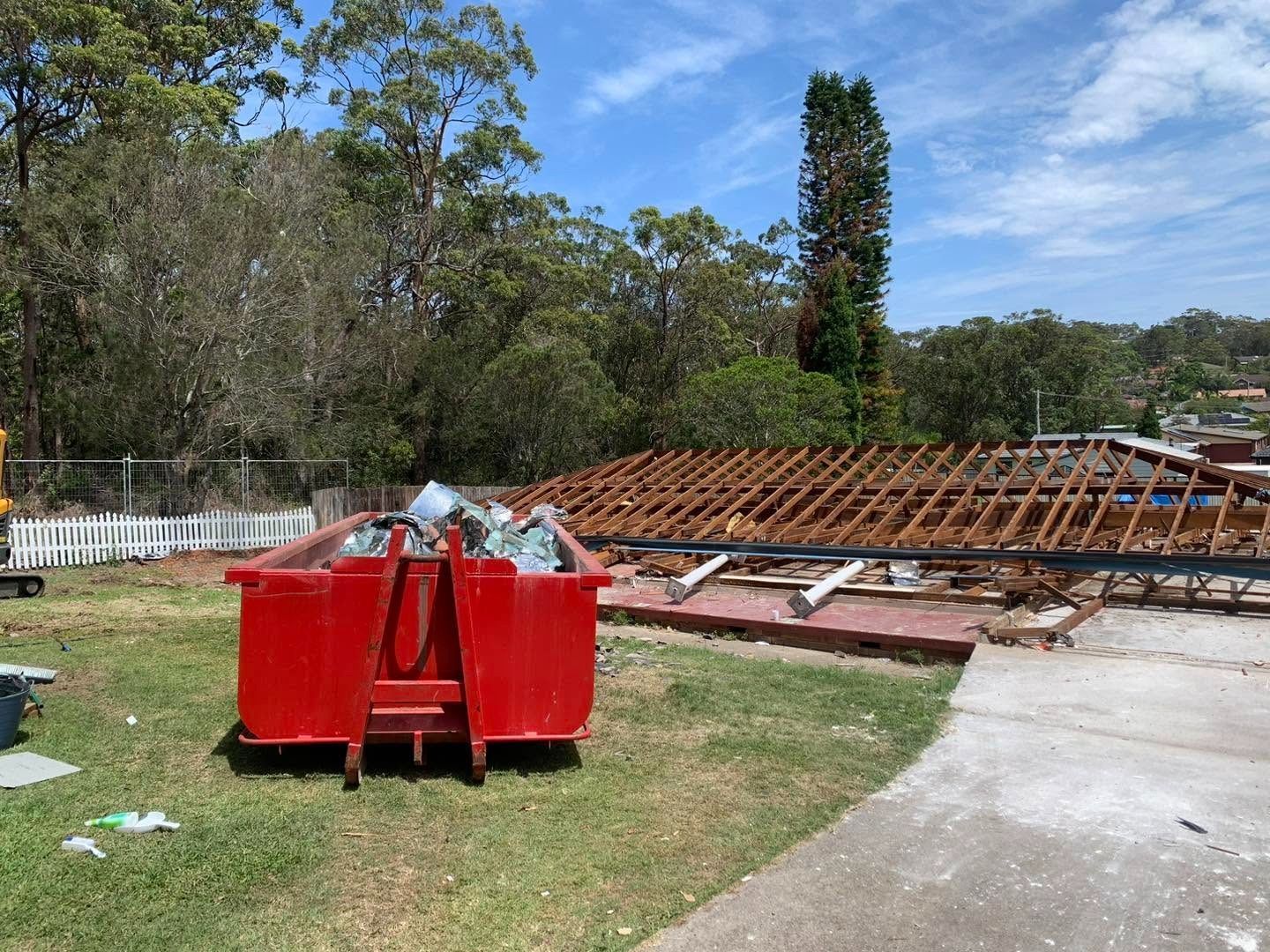
Consider a hypothetical townhouse development in Gosford involving demolition, excavation and construction. During demolition, the builder expects concrete, brick rubble, timber and mixed building materials. Excavation will generate soil requiring separate classification. Rather than placing everything into one large bin, the site manager arranges suitable Marrell bins for heavy masonry, a separate collection for mixed construction waste and an assessment of the excavated material before disposal. The builder then retains the relevant disposal and recovery records for the project file. This approach helps prevent incompatible materials from entering the same waste stream and makes it easier to demonstrate how the project managed waste.
How Construction Waste Is Classified: VENM, ENM, General Solid And Restricted Solid Waste
Construction waste classification in NSW determines how materials can be transported, processed, recycled or disposed of. The NSW EPA Waste Classification Guidelines provide the framework for assessing waste. Builders should establish the appropriate classification before arranging collection, particularly when dealing with excavation spoil or potentially contaminated materials. Economy Waste Group manages several waste classifications, subject to material assessment and acceptance requirements.
What Is Virgin Excavated Natural Material (VENM)?
Virgin Excavated Natural Material, or VENM, generally refers to natural material such as clay, gravel, sand, soil or rock that meets the applicable NSW regulatory definition.
It must satisfy specific requirements concerning contamination, excavation history and material composition. Builders should not assume that soil qualifies as VENM simply because it looks clean. Site history, contamination information and supporting documentation may be necessary to establish the correct classification.
What Is Excavated Natural Material (ENM)?
Excavated Natural Material, or ENM, refers to qualifying naturally occurring material that meets the requirements of the relevant NSW EPA resource recovery framework.
Unlike VENM, ENM generally requires assessment against specified criteria before it can be managed under the applicable resource recovery requirements. For builders, the important distinction is that soil cannot automatically be treated as suitable for reuse or disposal without checking its classification.
What Is General Solid Waste (Non-Putrescible)?
General Solid Waste (Non-Putrescible) can include common construction and demolition materials that meet the relevant classification criteria.
Depending on their composition, these materials may include:
- Concrete and brick rubble
- Timber offcuts
- Plasterboard
- Metal components
- Dry construction packaging
- Mixed demolition materials
Although these materials may fall within the same broad waste classification, separating recyclable materials can improve recovery outcomes.
What Is Restricted Solid Waste?
Restricted Solid Waste is a separate NSW waste classification for materials that meet the relevant restricted solid waste criteria. It requires more specific disposal arrangements than ordinary general solid waste, and not every recycling facility can accept it. If testing or a site assessment identifies restricted solid waste, builders should confirm the appropriate receiving facility before arranging transport.
What Happens If Construction Waste Contains Hazardous Materials?
Hazardous waste requires separate assessment and handling arrangements. Economy Waste Group can assess certain hazardous material requirements and advise on approved disposal options. Acceptance depends on the material and the necessary approvals. Asbestos, for example, must never enter a standard mixed construction waste bin. We offer a dedicated Asbestos Skip with a supplied Haz-Mat bag, with the material transported to the local council tip through the appropriate disposal arrangement. Chemicals, sharps, batteries, liquids and paint are also prohibited in standard bins.
Which Bin For Which Waste: Marrell Bins vs Hook Lift Bins
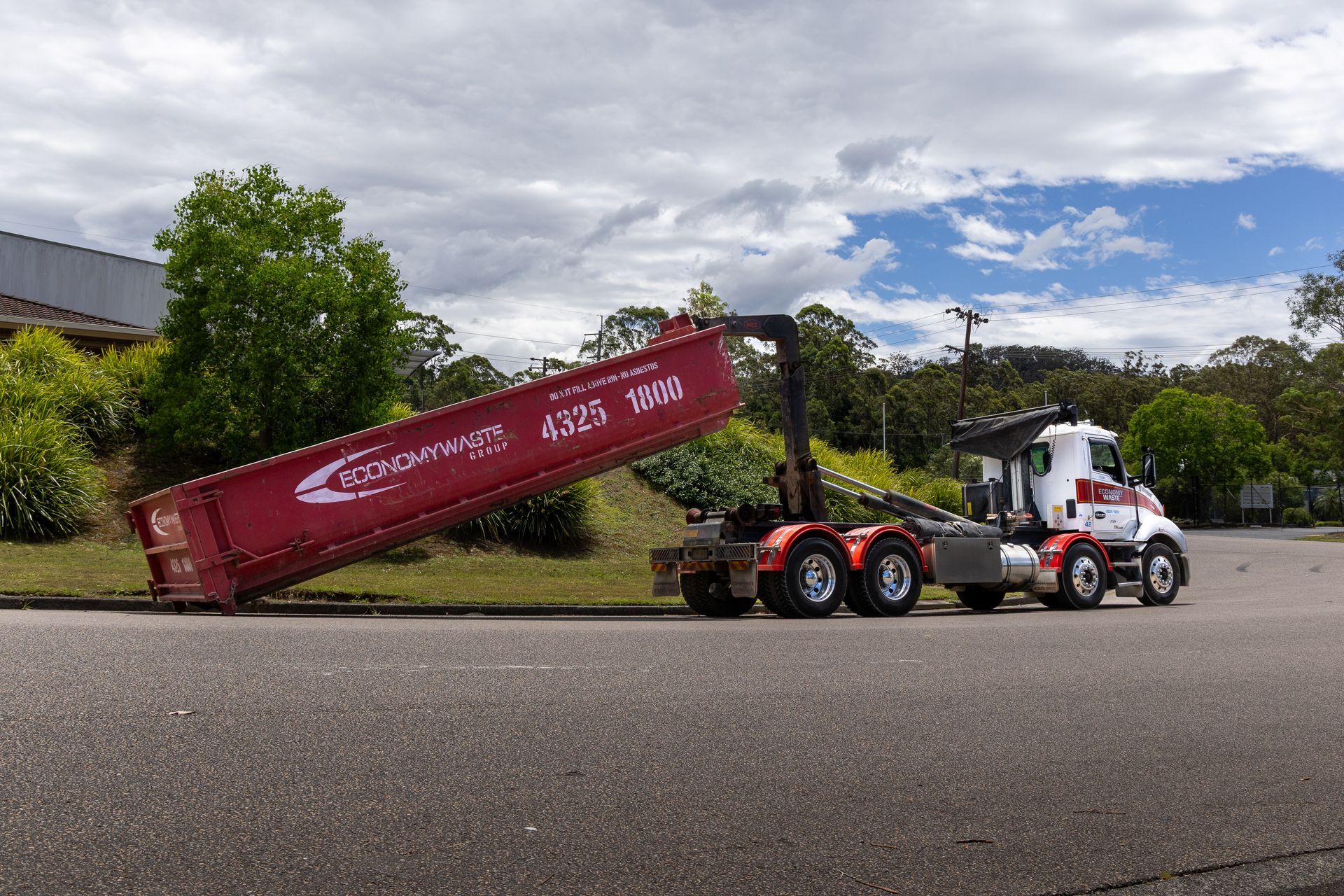
The right construction waste bin depends on material type, expected weight, available space and collection requirements. For builders comparing commercial skip bin hire Central Coast options, bin capacity alone does not determine suitability. A large bin may accommodate more bulky material, but a smaller Marrell bin can be more practical for dense waste or restricted access.
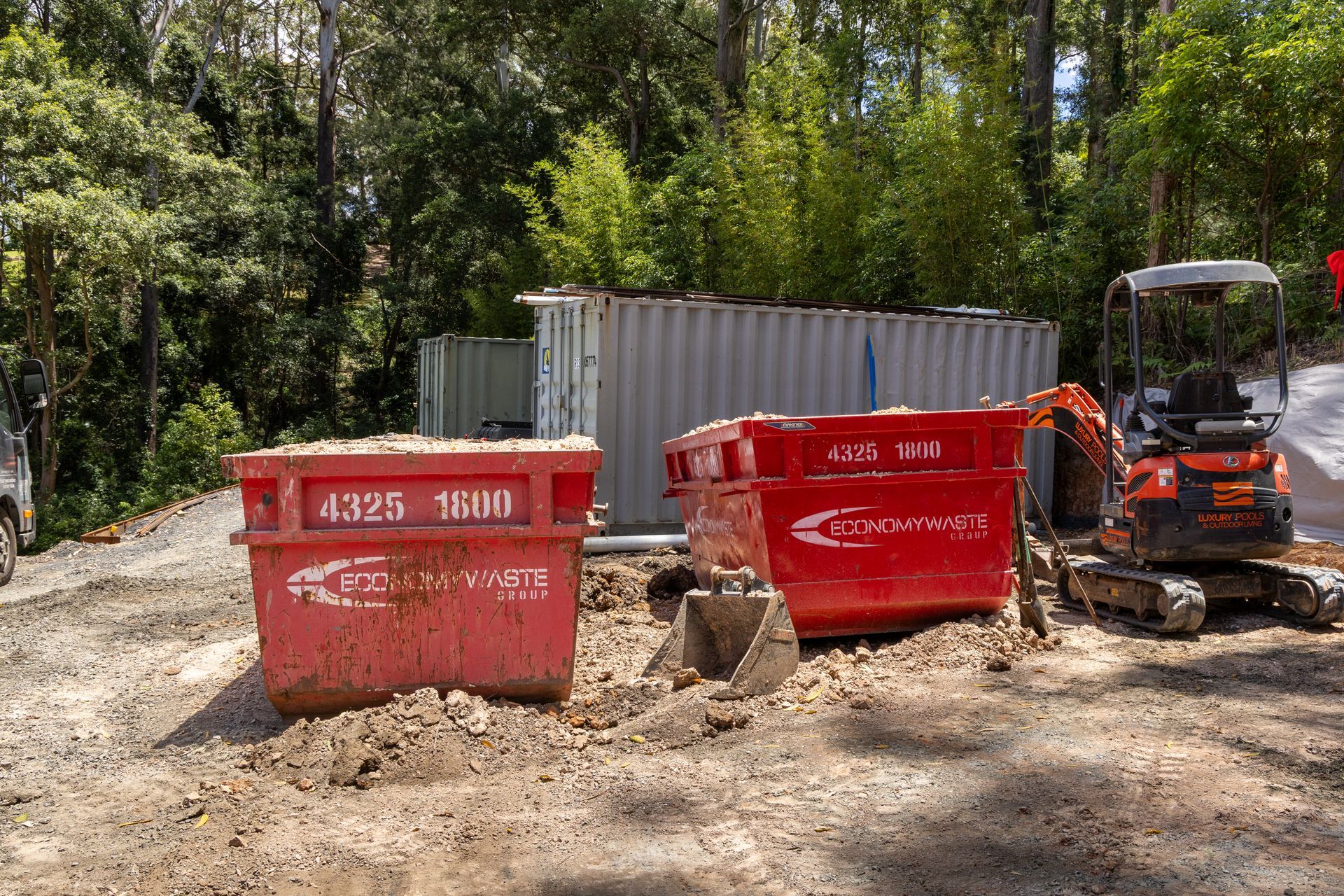
Which Bin Should Builders Use For Concrete And Brick?
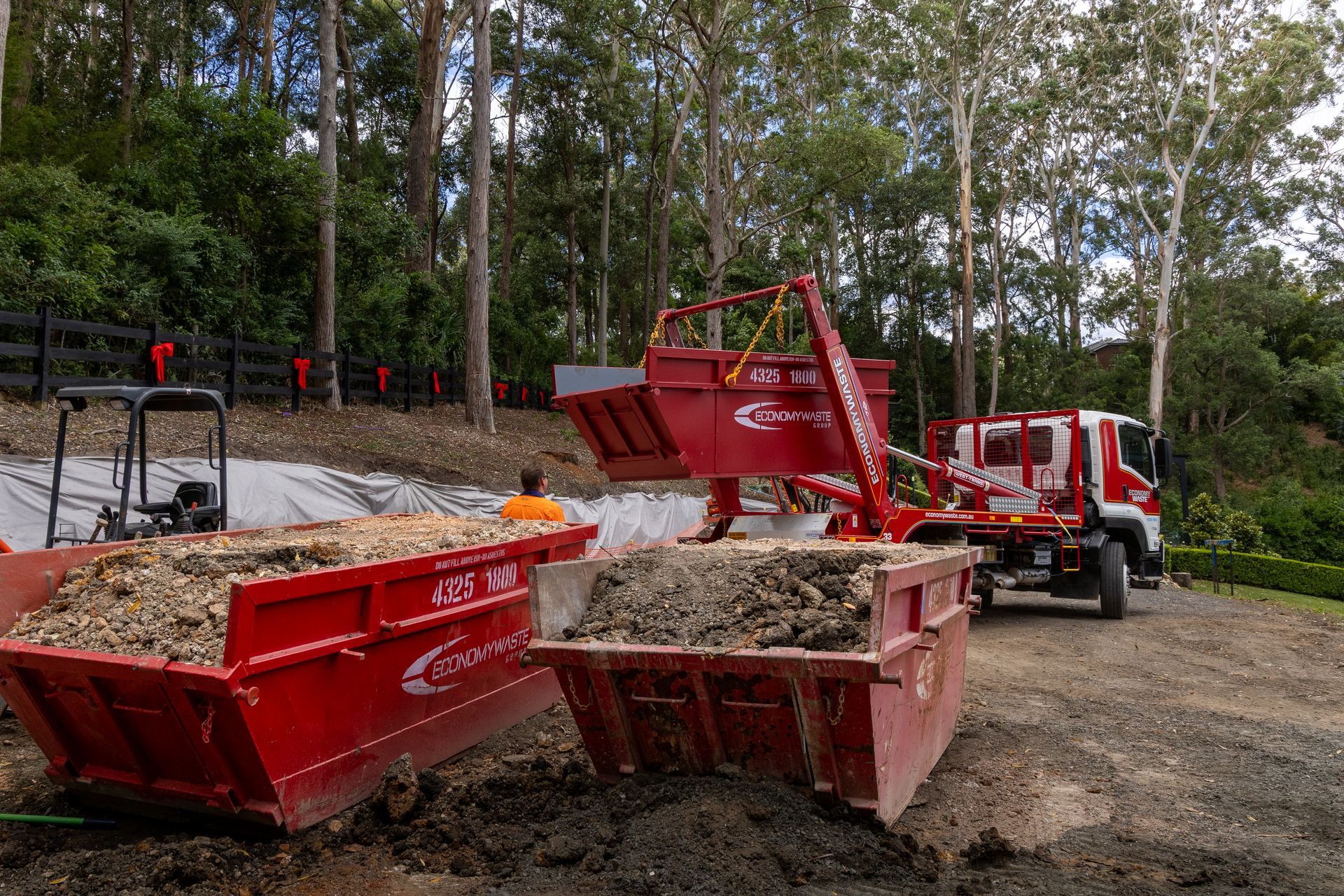
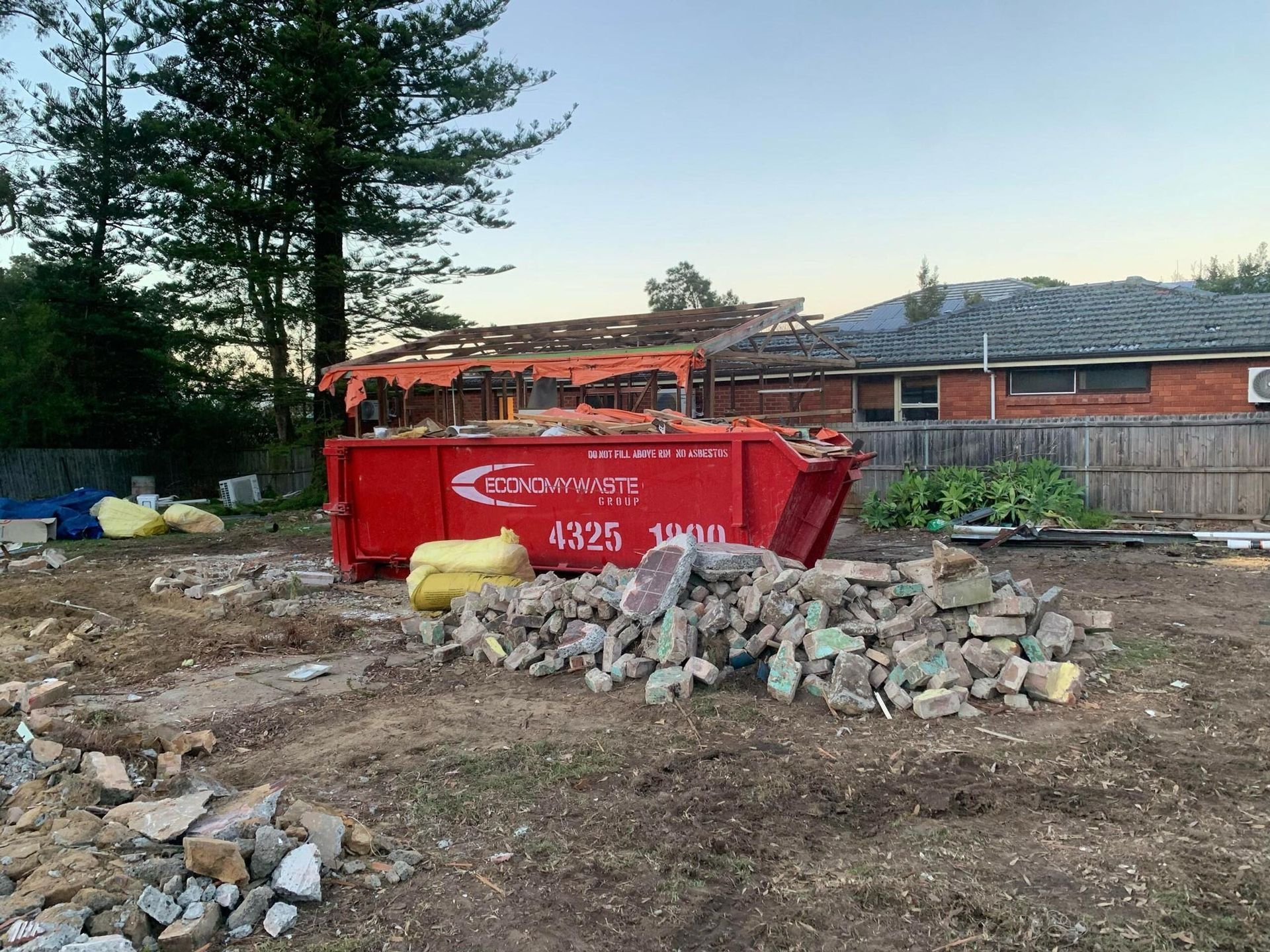
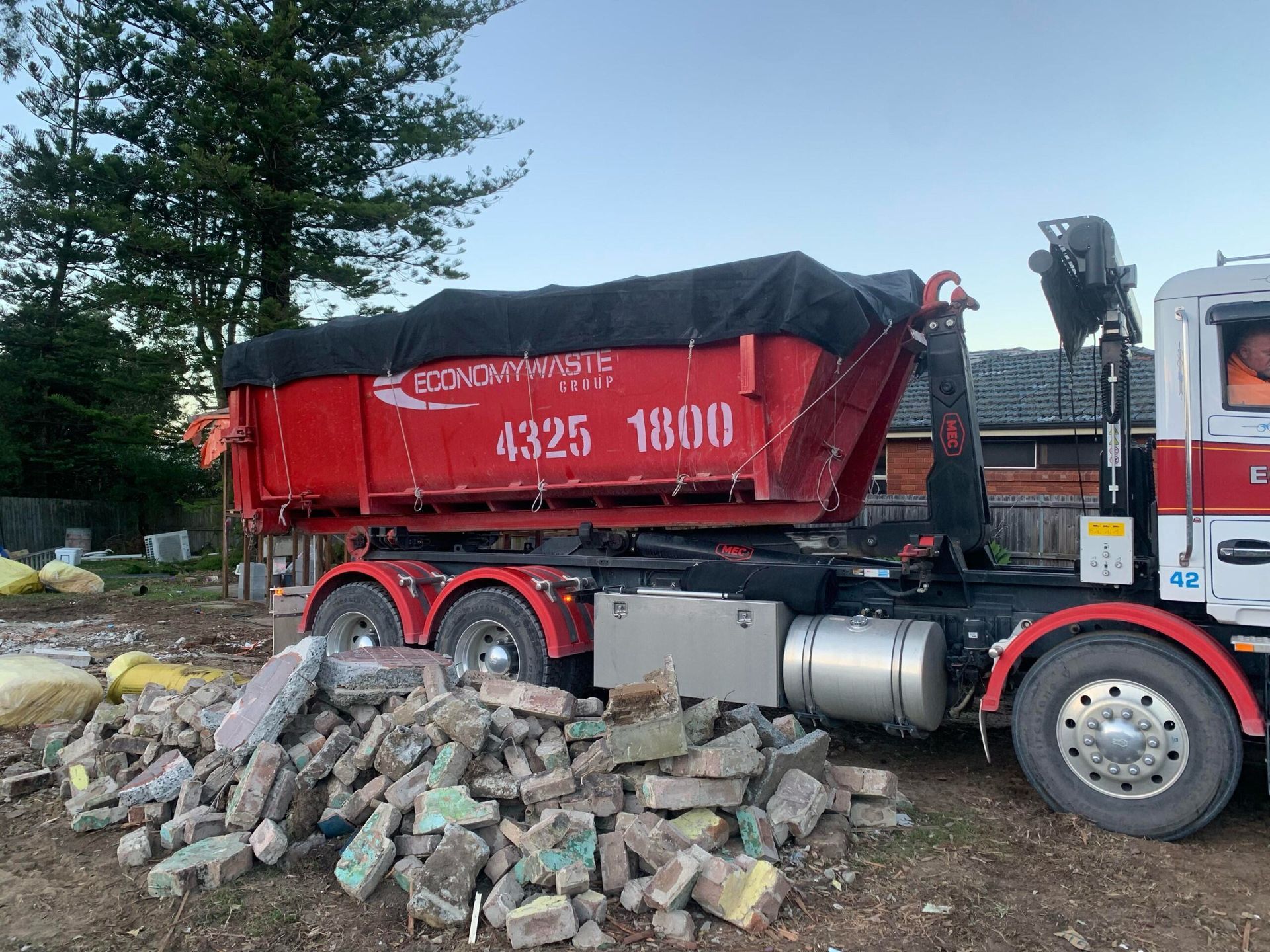
For concrete, brick rubble and other dense masonry materials, our 2T, 3T, 4T, 5T and 7T Marrell bins are suitable options. These sizes have no listed weight limit and accept brick and concrete, mixed waste, soil and approved green waste. Green waste excludes soil and grass. The 13H hook bin also accepts brick and concrete and has no listed weight limit. Builders should still confirm the load composition, bin placement and transport arrangements before collection. A bin without a listed weight limit is not permission to overload it or exceed legal vehicle loading requirements.
Which Bin Should Builders Use For Mixed Construction Waste?
For mixed construction waste, the appropriate size depends on the amount of material and the space available for delivery and collection.
Our
commercial skip bins range includes the following options:
| Bin type | Length | Listed weight limit | Suitable materials |
|---|---|---|---|
| 2T Marrell | 1.9m | No weight limit | Mixed waste, brick/concrete, soil, green waste* |
| 3T Marrell | 2.3m | No weight limit | Mixed waste, brick/concrete, soil, green waste* |
| 4T Marrell | 2.5m | No weight limit | Mixed waste, brick/concrete, soil, green waste* |
| 5T Marrell | 3.3m | No weight limit | Mixed waste, brick/concrete, soil, green waste* |
| 7T Marrell | 3.7m | No weight limit | Mixed waste, brick/concrete, soil, green waste* |
| 10T Marrell | 4.4m | 10 tonnes | Mixed waste, green waste* |
| 13H Hook | 5.4m | No weight limit | Mixed waste, brick/concrete, soil, green waste* |
| 18H Hook | 6.4m | 13 tonnes | Mixed waste, green waste* |
| 28H Hook | 6.9m | 13 tonnes | Mixed waste, green waste* |
Green waste excludes soil and grass. All materials remain subject to acceptance requirements. The 18H and 28H bins are not suitable for every location. Importantly, the 10T Marrell, 18H and 28H bins do not list brick and concrete among their accepted materials. Builders should never assume that a larger bin automatically accepts heavier waste types.
Are Larger Hook Lift Bins Always Better Value?
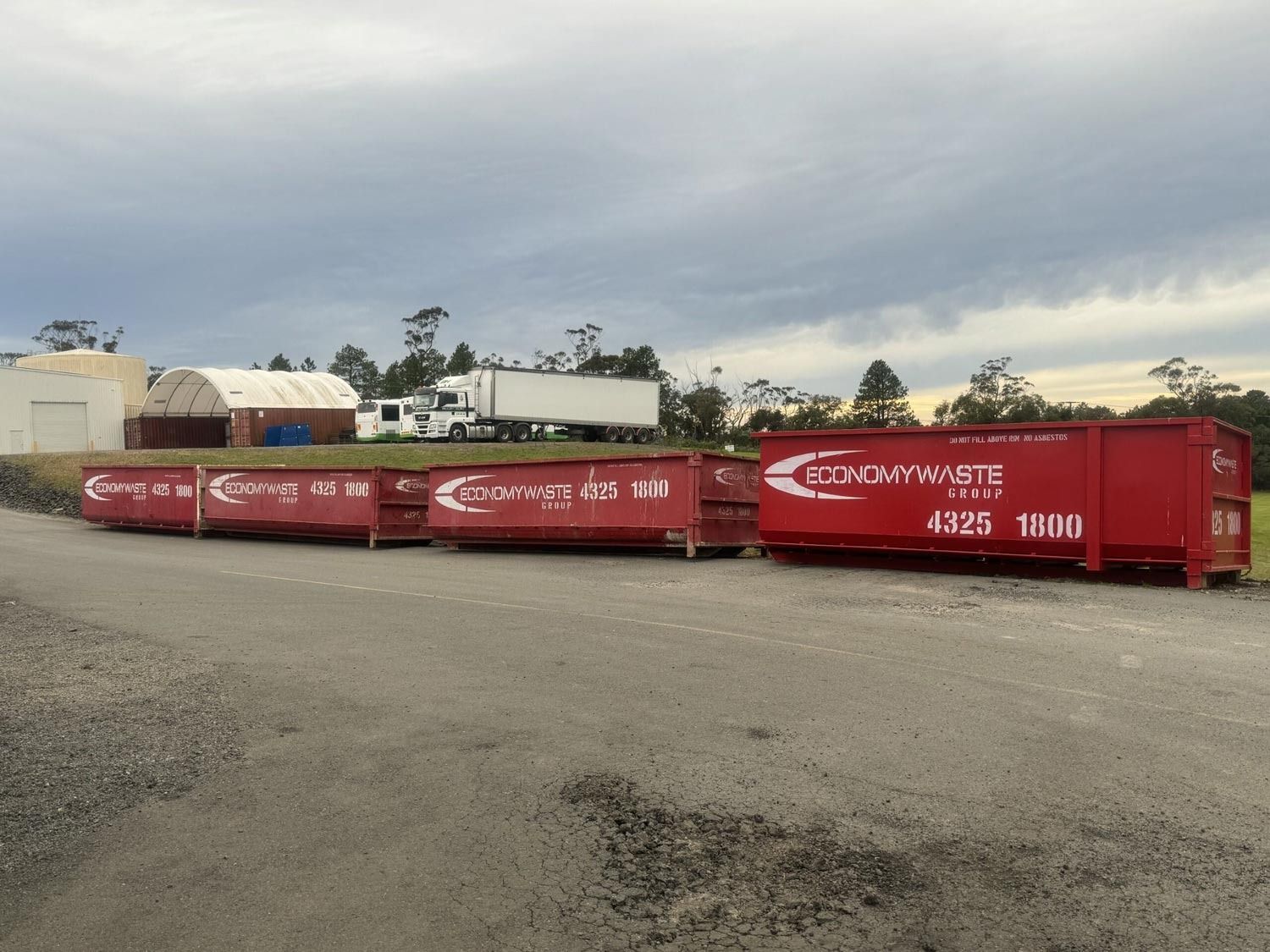
Not necessarily. An 18H or 28H hook bin can be useful for bulky demolition waste, commercial refurbishments and ongoing site collections. However, both have a 13-tonne weight limit and require suitable access. For a tight construction site or a project generating dense concrete rubble, two smaller Marrell bins may be faster and more economical than one large hook bin. The larger bin might not fit the available space, or its weight restriction may prevent the builder from using its full volume. This is why we assess the waste stream and site access before recommending a bin, rather than simply suggesting the largest available option.
Builders comparing service requirements can also read our guide to
commercial vs residential skip bin hire.
When You Need A Craneable Or Tippler Bin Instead
Standard Marrell and hook lift bins suit many ground-level construction projects, but some building sites require more flexible waste handling.
Multi-storey developments, restricted loading areas and projects with multiple working levels may benefit from craneable or tippler bins.
When Should Builders Use Craneable Bins?
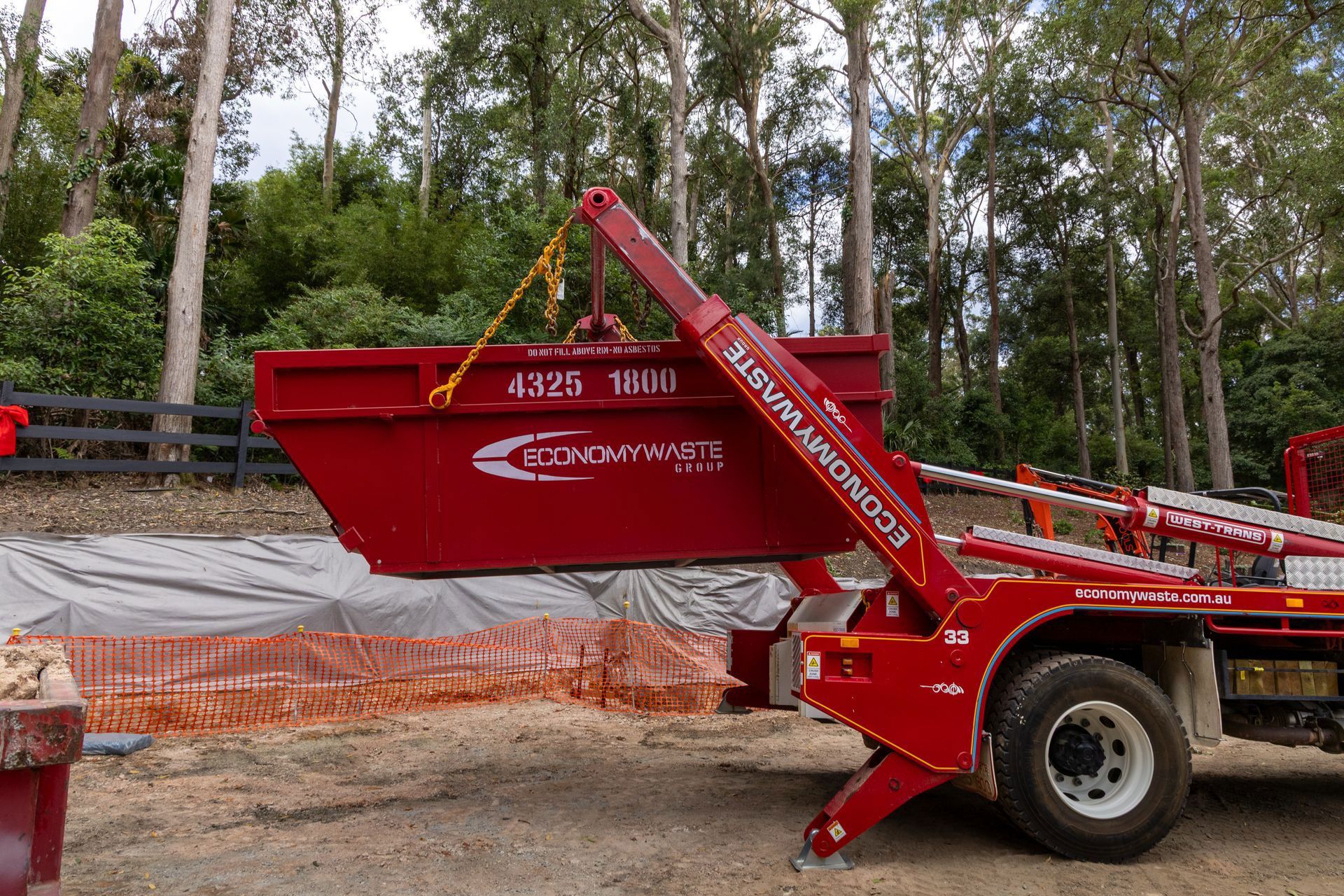
Craneable bins allow suitable lifting equipment to move waste containers between different levels of a construction site.
Economy Waste Group offers craneable bins in 1.3T, 3T and 7T sizes. They can be particularly useful for multi-storey construction where workers need to collect waste above ground level before transferring it for disposal. The builder must coordinate lifting arrangements and confirm that the selected bin suits the site's equipment and operating requirements.
What Is A Tippler Bin Used For?
Our 1T Tippler bins are forkable, allowing suitable equipment to move them around a construction site. Workers can collect waste at different locations before tipping the contents into a larger hook bin for removal. This arrangement can suit projects where several trades generate waste across separate work areas.
When Are Rear Lift Bins More Practical?
Rear lift bins suit ongoing waste streams that do not require large construction skips.
Our 240L, 660L and 3T rear lift options can support regular collection of cardboard and general site waste.
For longer projects, separating packaging and routine site rubbish from heavy construction debris can make waste handling more efficient.
Why Clean Soil, Mixed Waste And Contaminated Spoil Can't Go To The Same Facility
Clean excavation material, mixed construction waste and contaminated spoil cannot automatically go to the same receiving facility because each material may have different classification, processing and disposal requirements. A facility authorised to accept general construction waste may not be approved to receive contaminated soil or other restricted materials. For builders, incorrect separation can create problems when a load reaches the receiving facility.
What Happens When A Mixed Load Arrives At A Recycling Facility?
At our EPA-licensed recycling facility in West Gosford, incoming waste must be assessed against the facility's acceptance requirements.
If a load contains materials that do not match its declared waste type, it may require further assessment, separation or reclassification before the appropriate disposal route can be determined.
For example, a load described as clean excavation soil may contain demolition rubble or material that raises contamination concerns. In that situation, the load cannot simply be treated as clean soil. Additional assessment may be necessary, potentially creating extra handling costs and delaying disposal.
Sorting materials correctly at the construction site helps avoid these complications.
When Does Excavation Spoil Need A Waste Tracking Certificate?
Some spoil types require waste tracking documentation, depending on their classification and the applicable NSW regulations. Builders should not assume every excavation load needs a tracking certificate, or that ordinary tipping receipts satisfy every tracking requirement. The correct approach is to establish the material classification first and confirm which transport, tracking and disposal records apply. Our
spoil management service can help builders assess excavation waste requirements and arrange appropriate handling and disposal.
Proving Your Recovery Rate: What Builders Can Ask Their Waste Provider For
Builders working under development consent conditions or sustainability requirements may need evidence showing where construction waste went and how much material was recovered. A supplier's general recycling claim can demonstrate its overall capability, but it does not automatically establish the recovery rate achieved on an individual project.
What Waste Disposal Records Should Builders Request?
Depending on the project and reporting requirements, builders can ask their waste provider about the availability of:
- Weighbridge records: Evidence of the quantity of waste received at a facility.
- Disposal receipts: Records identifying waste deliveries and receiving facilities.
- Waste classification documentation: Reports supporting the classification of excavation spoil or other assessed materials.
- Waste tracking records: Documentation required for applicable regulated waste movements.
- Recycling and recovery reports: Information showing how much material was recovered, recycled or directed to disposal.
- Facility licence details: Information confirming the receiving facility's relevant environmental approvals.
Not every project requires every document. The builder should check the development consent, contract specifications and any applicable sustainability reporting framework.
How Can Economy Waste Group Support Construction Waste Reporting?
Economy Waste Group operates its own council-approved, EPA-licensed recycling facility at 30 Nells Road, West Gosford.
We recycle over 85% of the waste we collect, recovering materials such as concrete, metals, timber and plasterboard.
Our recycling operations also produce reusable materials, including recycled road base and aggregate products.
Because we operate a local processing facility, builders can discuss waste acceptance, processing and available reporting information directly with our team.
Economy Waste Group is also a member of the Waste Contractors & Recyclers Association of NSW and the Green Building Council of Australia.
For builders working towards Green Star requirements or documenting compliance with development consent conditions, these capabilities provide a useful starting point for discussing waste recovery evidence.
However, our overall recycling rate should not be presented as a guaranteed recovery percentage for every individual construction project. Project-specific results depend on the waste materials received and how they are processed.
Why Does A Local Recycling Facility Matter For Central Coast Builders?
Transport distance can influence the cost and efficiency of builders waste removal on the Central Coast. Having an approved receiving facility in West Gosford means suitable waste can be processed locally rather than automatically requiring transport to Sydney. Builders and contractors can also deliver accepted materials directly to our facility, with an onsite weighbridge supporting accurate quantity records. For projects across the Central Coast, Lake Macquarie and Newcastle, this local infrastructure can make construction waste management more practical.
What Should Builders Confirm Before Ordering Their Bins?
Before arranging construction waste collection, confirm the expected materials, their classifications, the available loading area and any documentation required under the project's approval conditions. The most effective construction waste disposal Central Coast projects rely on is not simply the largest bin available. It is a waste management arrangement that matches each material to an appropriate container, collection method and receiving facility. For reliable construction waste disposal on the Central Coast, contact
Economy Waste Group on
(02) 4325 1800 to discuss your project or arrange a commercial site assessment. Our team can help identify suitable bins, review access requirements and advise on waste classification and disposal arrangements before collection begins.
FAQs
Do Builders Need A Waste Management Plan For Construction Projects In NSW?
A construction waste management plan may be required under development consent conditions or other project requirements. Builders should review their approval documentation and identify how waste will be separated, transported and disposed of before construction begins.
Can Concrete And Bricks Go In The Same Skip Bin?
Yes, concrete and bricks can go together in an appropriate bin, provided the waste meets the supplier's acceptance requirements. Economy Waste Group's 2T–7T Marrell bins and 13H hook bin accept brick and concrete. Not every larger bin is suitable for these heavy materials.
Can I Put Excavated Soil In A Mixed Construction Waste Bin?
You should confirm the soil classification and the bin's acceptance conditions before loading it. Economy Waste Group lists soil as an accepted material for its 2T–7T Marrell bins, but potentially contaminated spoil requires separate assessment and may need different disposal arrangements.
What Documents Prove Construction Waste Has Been Disposed Of Correctly?
Relevant evidence may include disposal receipts, weighbridge records, waste classification reports and any required tracking documentation. If the project has recycling targets, ask whether project-specific recovery reports are available.
Is Hook Lift Bin Hire Suitable For Every Construction Site?
No. Hook lift bin hire on the Central Coast depends on site access, available placement space and the type of waste being collected. Economy Waste Group's 18H and 28H bins are not suitable for every location, so builders should confirm access before arranging delivery.
Where Can Builders Dispose Of Construction Waste On The Central Coast?
Economy Waste Group operates a council-approved, EPA-licensed recycling facility at 30 Nells Road, West Gosford. Builders can deliver accepted construction and demolition waste directly or arrange collection through the company's commercial waste services. Material acceptance should be confirmed before delivery.
Latest Posts